
https://www.colombiainforma.info/antes-que-el-oro-el-agua
By Libertad Díaz Vera and Claudia Alavez
Nearly a century after Jacques Roumain wrote Masters of the Dew, a classic of Haitian literature, water continues to occupy a central place in the lives of Haiti’s rural communities. If, in the novel, the search for water was also a search for dignity and collective organization, today the defense of water sources once again raises a fundamental question: how do we protect that upon which life itself depends?
The new mining decree published in March 2026 has reopened the debate over the future of mining in Haiti. Much of the discussion has focused on legal issues, exploration permits, and the economic opportunities that could arise from mineral extraction. Yet one question is raised far less often and should be at the heart of the debate: what will happen to the water if dispossession is legalized?
This question is especially important in a country where a large share of the population still struggles to access safe drinking water and where rural communities depend directly on rivers, springs, and wells for their livelihoods. Before discussing how much gold or copper can be extracted from Haiti’s subsoil, we need to understand the situation of one of the most essential resources to life.
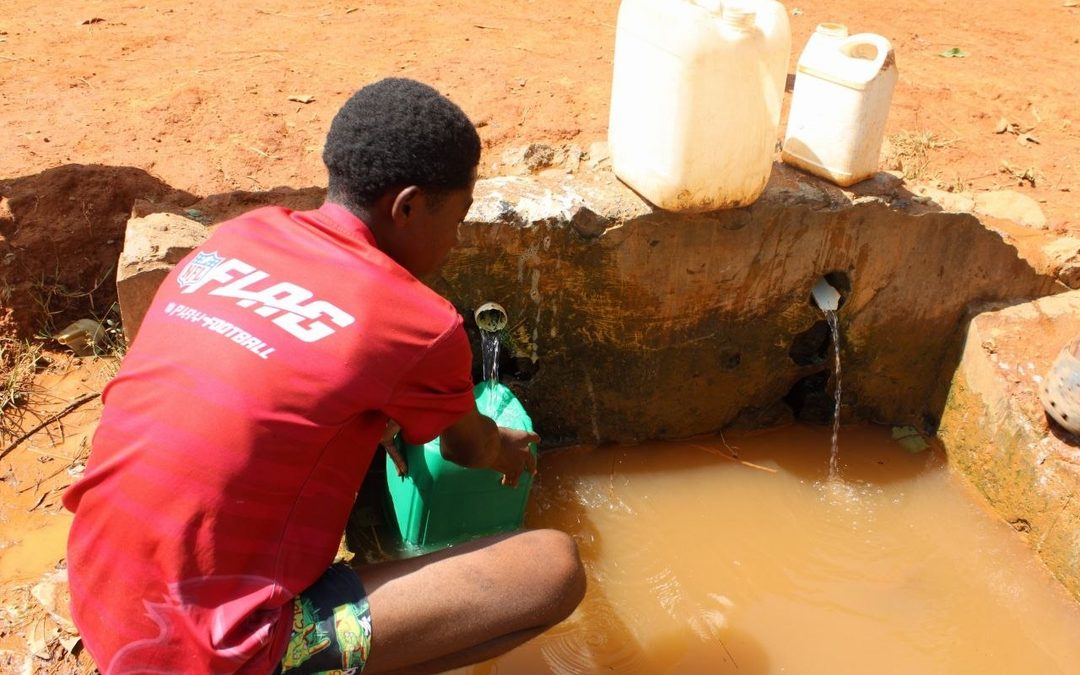
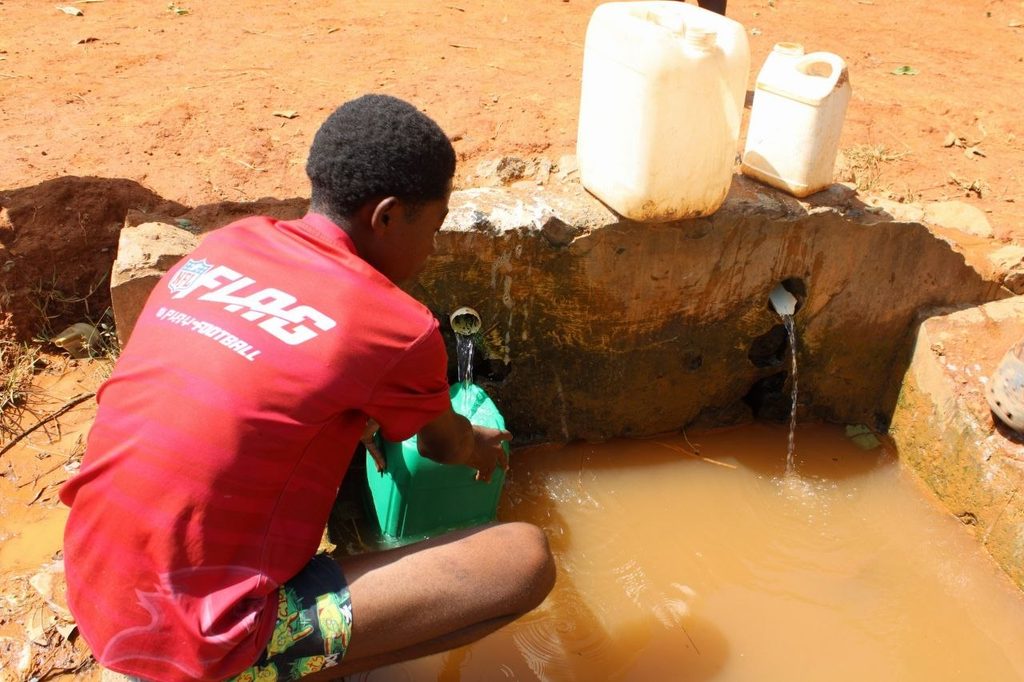
According to UNICEF, 26% of Haiti’s population lacks access to safe drinking water sources, a figure that rises considerably in rural areas. The World Bank, meanwhile, reports that in 2020 only 43% of the rural population had access to basic drinking water services. In many communities, obtaining water means walking long distances, waiting for water vendors to arrive, or relying on sources whose availability changes with the seasons.
Between Natural Abundance and Everyday Scarcity
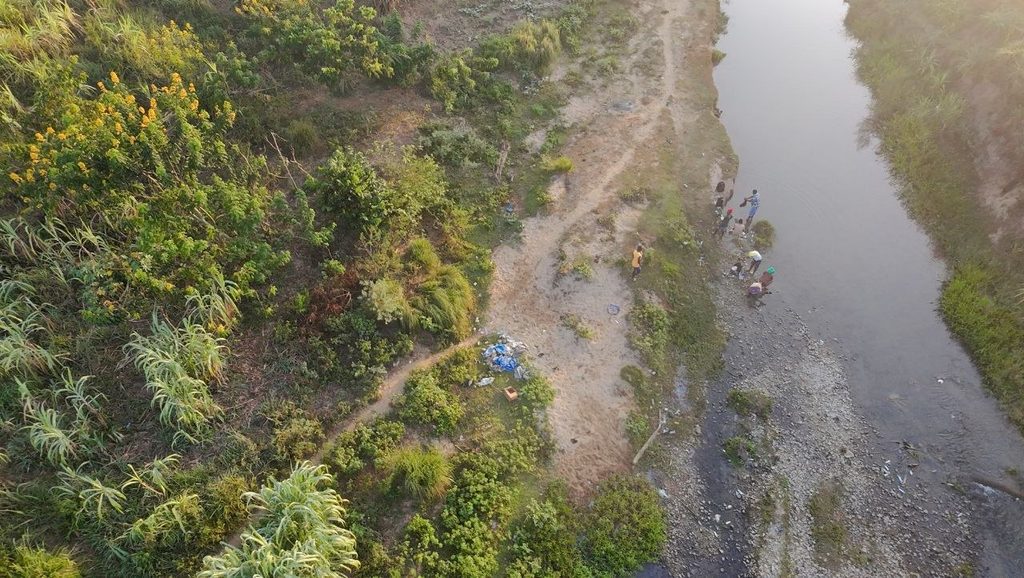
To speak about water in Haiti is to confront an apparent contradiction. The country has important watersheds and numerous rivers that sustain agricultural and community life. Among them are the Artibonite River—the longest river on the island and essential to national agricultural production—the Grande Rivière du Nord, the Limbé River, the Trois-Rivières River, and the Massacre River, as well as hundreds of springs, streams, and smaller water sources that supply rural communities throughout the country.
Yet the existence of rivers and springs does not mean that access to water is guaranteed. Rather than relying on large public distribution systems, a significant portion of the population depends directly on natural water sources, community-run systems, or private vendors for their daily water needs.
The challenges do not end with access. There are also serious problems related to water quality and sanitation. According to UNICEF, seven out of ten Haitians lack access to basic sanitation services, and a significant proportion of rural households continue to practice open defecation. These conditions increase the risk of contamination of water sources and the spread of disease.
The cholera epidemic that affected the country between 2010 and 2019 demonstrated the consequences of these conditions. More than 820,000 people were infected and nearly 10,000 died, exposing the close relationship between access to safe drinking water, public health, and the institutional capacity of the state.
These challenges are compounded by environmental degradation. Decades of deforestation and erosion have weakened ecosystems’ capacity to retain water, protect watersheds, and replenish springs and aquifers. According to United Nations data, primary forests, which covered 4.4% of Haiti’s territory in 1988, had declined to just 0.32% by 2016.
Therefore, before discussing any industrial project that requires large quantities of water it is essential to recognize a fundamental reality: for millions of people in the country, the issue is not simply how much water exists, but who can access it, under what conditions, and with what guarantees for the future.
What Happens to Water When Metal Mining Arrives?
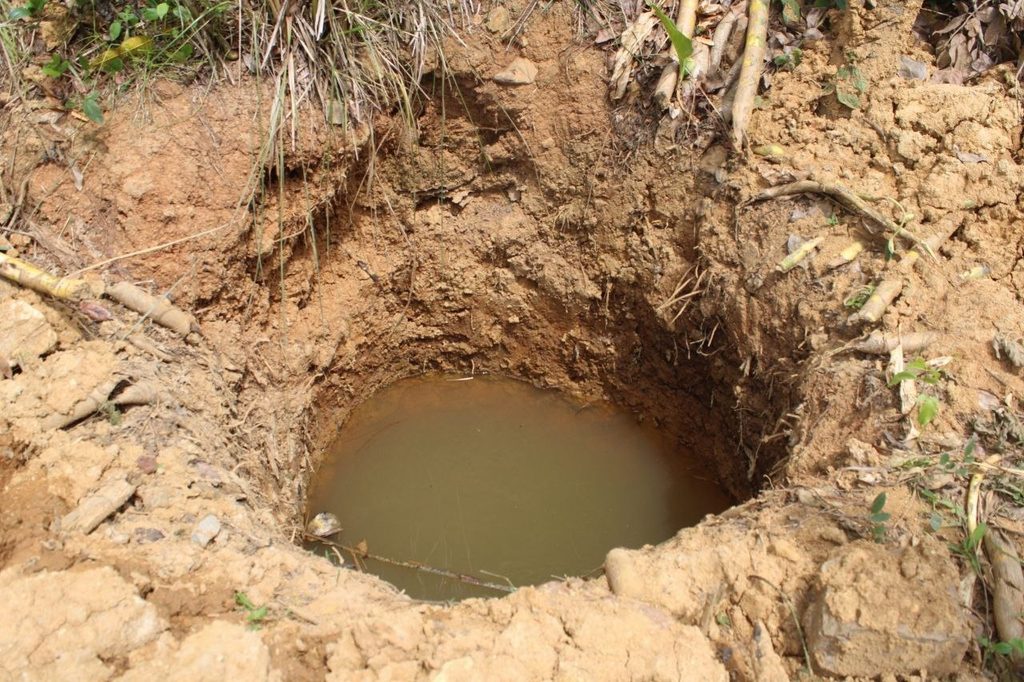
Metal mining requires significant quantities of water throughout the different stages of mineral exploration, extraction, and processing. In the case of gold, a single industrial mine can use millions of liters of water every day to crush rock, separate minerals, and process the waste generated during extraction.
For example, according to an OMAL report, the El Dorado mining project, a gold mine in El Salvador, would require approximately 327.9 million liters of water per year, or nearly 898,000 liters per day. This figure shows that metal mining not only entails risks of contamination from cyanide and toxic waste, but also places continuous pressure on local water sources.
The question, then, is not only how much water a mine consumes, but where that water comes from and what happens to it afterward.
International experience has shown that mining can create risks associated with reduced flows in rivers and springs, heavy-metal contamination, acid mine drainage, and the leakage of substances used in mineral processing. Although not every project produces the same impacts, water often becomes one of the main common goods that companies seek to control and wrest from communities.
In Haiti, this concern takes on a particular significance. The main areas identified for mining activities are located in the northern and northeastern regions of the country, territories where peasant agriculture depends directly on small watersheds, springs, and surface watercourses.
In places such as Kadouch, in the commune of Quartier-Morin, where permits related to mining exploration have already been granted in the past, the water flowing through rivers and springs is not a surplus resource. It is the water used to irrigate crops, sustain livestock, cook food, and supply families.
For this reason, when a mining concession overlaps with a rural territory, it does not merely create a struggle over the subsoil. It also creates a struggle over the water flowing through the watersheds, the roads connecting communities, the plots of land that feed families, the forests that protect springs, and the collective decisions that have made it possible to sustain life under historically adverse conditions.
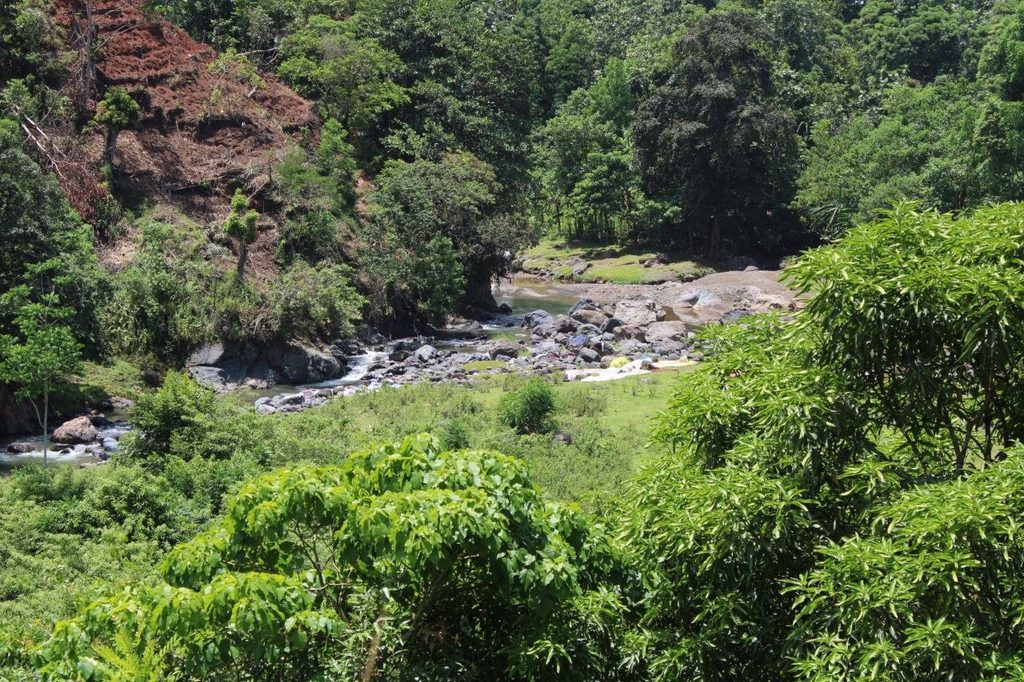
For a company, water may appear simply as an input within its operating costs. This way of valuing water is particularly troubling in territories where families depend on rivers, springs, wells, and community-run systems to sustain their everyday life. The debate over the mining decree, therefore, cannot be reduced to procedures for granting permits, attracting investment, or regulating mineral extraction. The central question is whether a country facing serious problems in access to safe drinking water, inadequate sanitation, accelerating deforestation, and limited institutional capacity to monitor environmental damage should open new territories to an activity that consumes water, generates waste, and leaves long-term impacts.
In this sense, the decree poses a serious risk, as it could ultimately function as a tool for legalizing what communities experience as a threat. Behind the language of legal certainty, modernization of the mining sector, or the need to attract investment, a profound reorganization of territory may be taking place. The legalization of mining opens the subsoil to corporate interests and may reinforce new forms of control over water, land, infrastructure, and community decision-making.
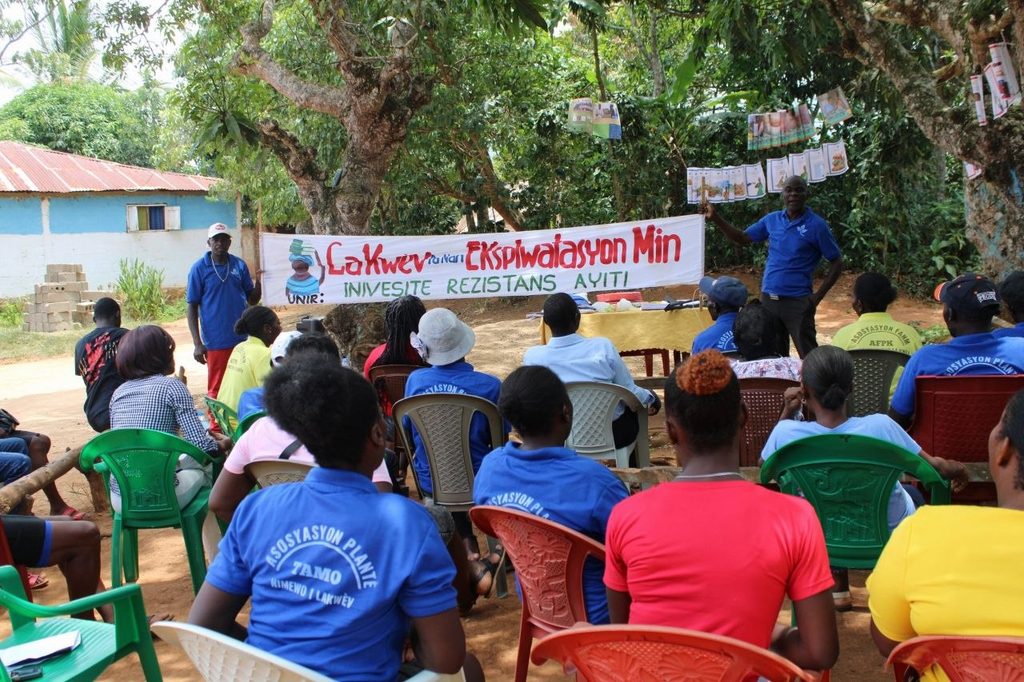
Faced with this scenario, various organizations and communities have begun promoting proposals aimed at protecting the commons and rural territories. Among these is the creation of Mining- and Extractivism-Free Territories, understood as spaces where the defense of water is connected to peasant agriculture, community health, and the ability of people to remain in their territories.
Declaring territories free from mining makes it possible to affirm, before the damage occurs, that water sources cannot be subordinated to activities that consume large volumes of water and create long-term environmental risks. In a country where access to water is already an everyday challenge, this proposal places community decision-making at the center of the debate and puts forward a concrete demand: protect rivers, springs, wells, and groundwater recharge areas before mining advances upon them.
This article is the sixth installment in the series “Mining in Haiti: Context, Risks, and Debates,” developed as part of the Territory Defense and Resistance Program of the Itinerant University of Resistance in Haiti (UNIR).