UNIR’s work in Haiti has been characterized by creating spaces of encounter—spaces to see one another, to share, to be together. However, in our third year, we faced a new situation: the rise of violence from armed groups in Port-au-Prince.
In a context of permacrisis, where violence limits in-person meetings, not being able to see each other has a direct impact on mental health and on collective life.
This situation made it impossible to carry out face-to-face activities. We had to adapt, including our Spanish courses, which in the capital shifted entirely to a virtual format. Alongside this, there was another element that was difficult to name but very present: a shared sense of discouragement. We realized that hope could not be sustained individually, because hope is also collective.
Faced with this context, we decided to pause and think about how we could reconnect and meet again.
A commitment to collective care
This first campaign emerged as a deeply communal and pedagogical act. It was a closed campaign, designed for the UNIR family in Haiti. We were not trying to create something public, but rather to build a space for ourselves.
We drew inspiration from our own ways of gathering in Haiti: carnivals, celebrations, those spaces where beyond festivity, people talk, connect, and meet again.
We created a simple but powerful space: a WhatsApp group. There, people living in different territories—from Port-au-Prince to the north of the country—began to share, listen, and recognize themselves as part of something shared.
Play as a form of participation
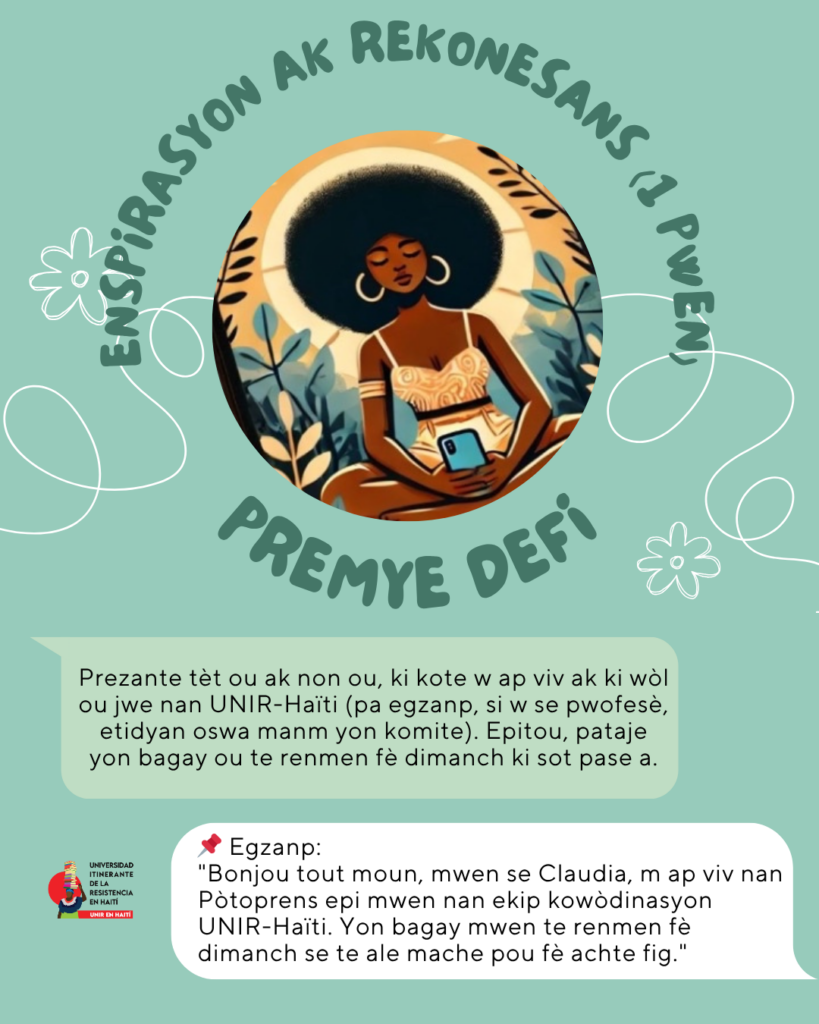
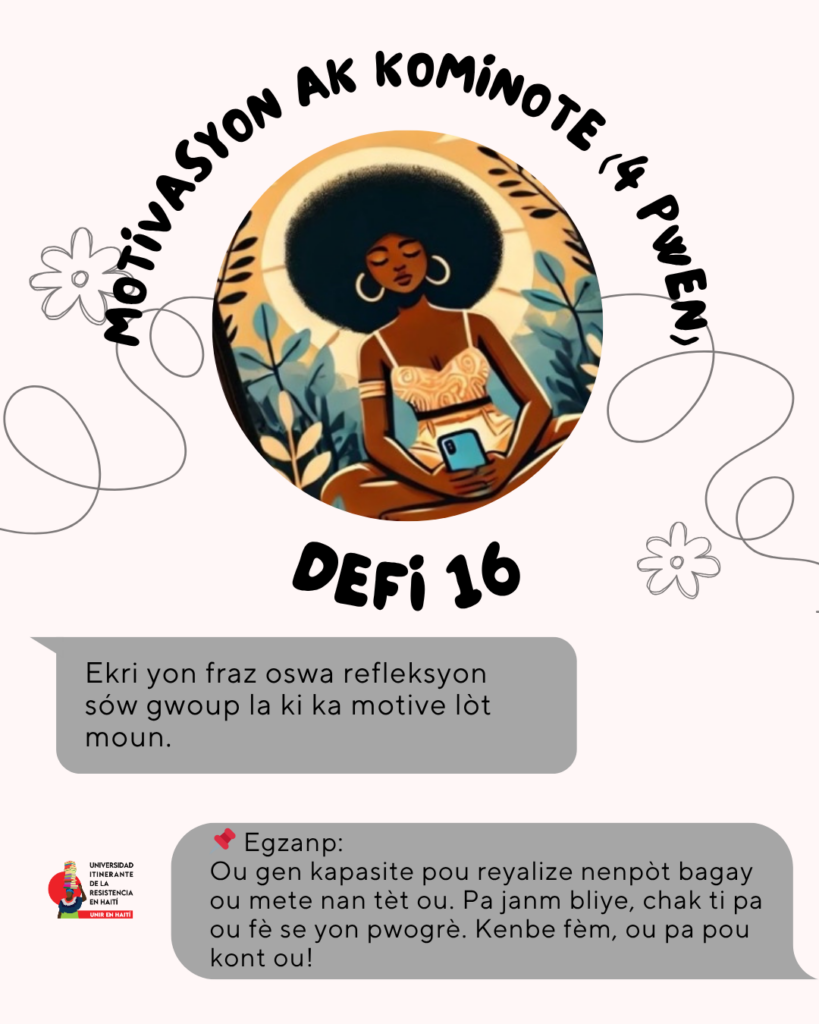
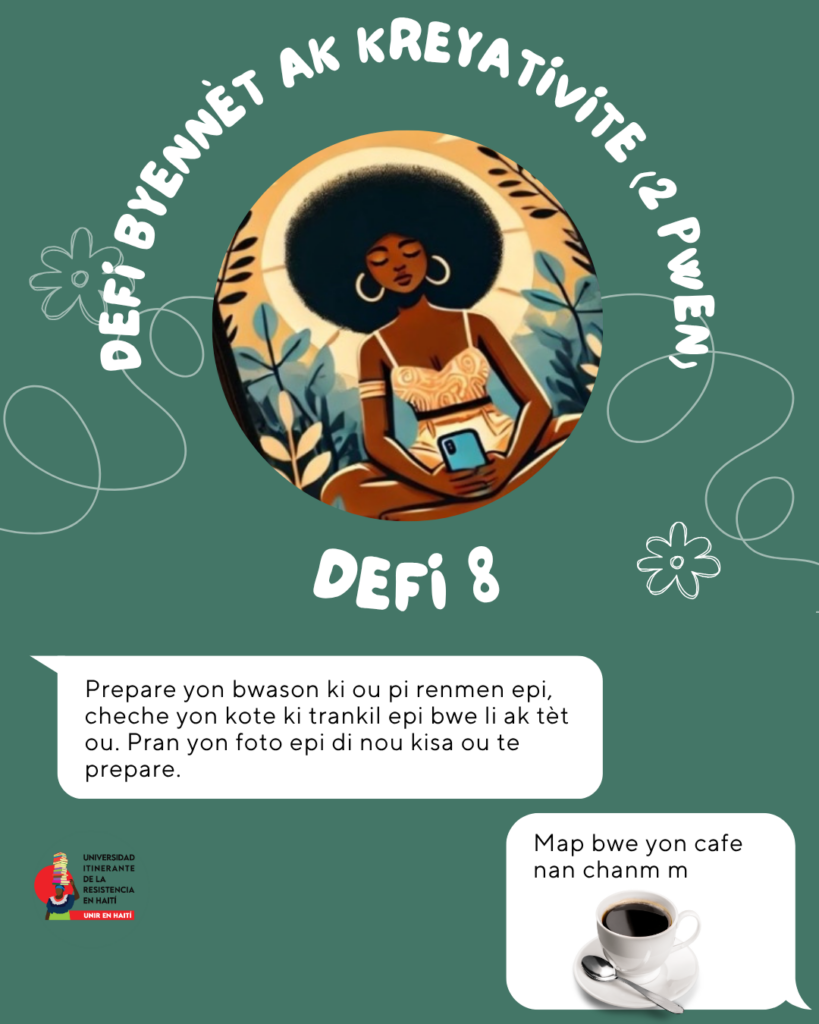
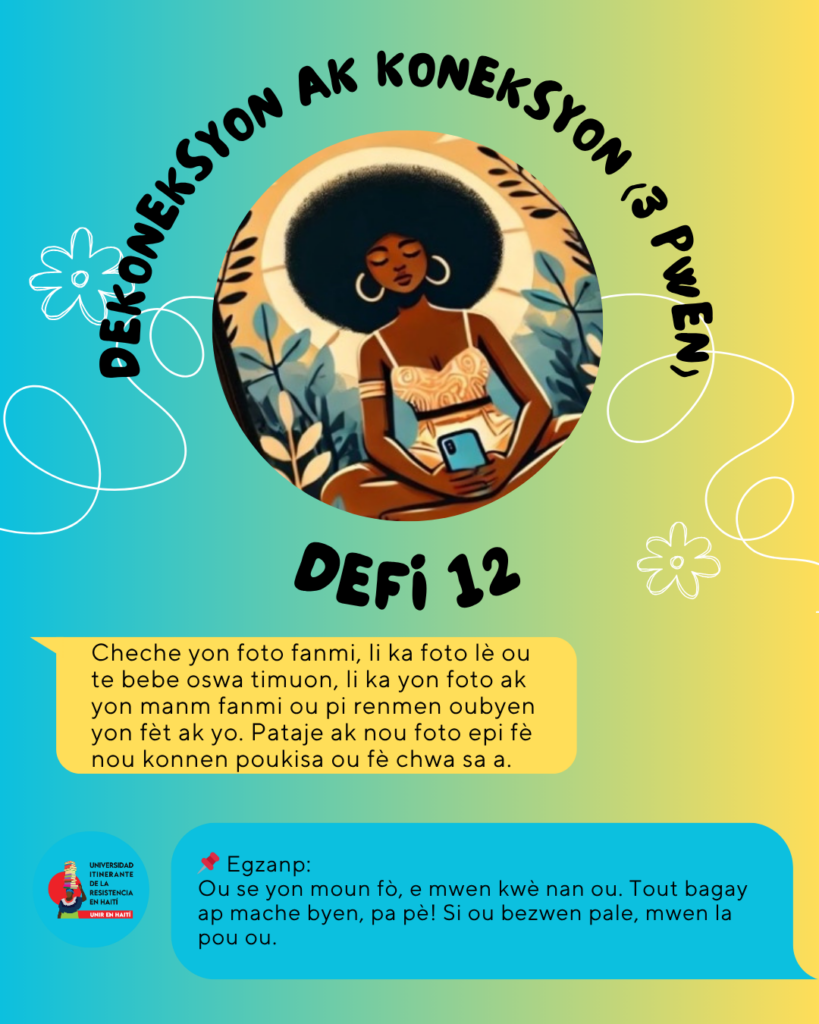
The campaign was organized around challenges grouped into four areas:
- inspiration and recognition
- well-being and creativity
- disconnecting and reconnecting
- motivation and community
These blocks were designed to open spaces for recognition, gratitude, care for well-being, and for turning disconnection into a meaningful pause.
For about three months, we proposed three challenges per week.
Each person could choose how and when to participate. The goal was not to comply, but to be present.
Some challenges were as simple as calling someone they had not spoken to in a long time. In one of these moments, a participant shared that they had not communicated with a friend for years, and that thanks to the challenge, they reconnected.
The point system was not designed to create competition, but to bring back play as a way of engaging without pressure and without fear of making mistakes.
Little by little, the group filled with small gestures: photos of daily life, shared recipes, encouraging messages, and family memories that many people wrote in detail, as if they were inhabiting those moments again.
What began to change
More than 50 people actively participated in this experience.
But beyond the numbers, what began to transform was the collective mood. People shared that they felt calmer, more accompanied, less alone.
A process that opened a path
“Disconnecting to Reconnect” was not just a campaign.
It laid an emotional and community foundation that allowed us to continue together, even in the midst of uncertainty.
Through the challenges, we began not only to reconnect among ourselves, but also to question our surroundings: how to care, how to contribute, how to sustain what is common at a distance.
From there, a question emerged that shaped the next step:
How do we extend this care beyond ourselves and toward the territory?
With that question, our next campaign began to take shape: Planting to Reconnect.