
By Claudia Alavez and Libertad Díaz
Translation by Eduardo Aguilar
The new decree establishes the regulation for granting and transferring mining permits, occupying land, and authorizing mining operations. With its upcoming entry into force, it is urgent to understand what rights it creates for companies, what capacity communities will have to make decisions about their territories, and why metallic mining must be stopped in Haiti.
On September 30, 2026, a decree reorganizing the framework governing mining activities will take effect in Haiti. Published on March 30, the text established a six-month period before its implementation begins . During that time, there has been no substantive public debate about its consequences, nor have communities whose territories could be affected been adequately informed.
The decree regulates a broad range of activities, including metallic mining, quarries, solid fossil substances, and artisanal alluvial gold mining. Here we focus on metallic mining because the gold, silver, copper, and bauxite deposits identified in the country could affect large areas, entire watersheds, and territories where the population depends directly on agriculture and local water sources.
The upon the deadline of September 30 makes it necessary to look beyond the technical language. Once this decree is implemented, a new framework for the granting, renewal, transfer of exploration and exploitation permits, as well as the authorization of mining operations, and the establishment of mechanisms for land occupation and compensation will take hold. In addition, the transitional provisions allow holders of previous permits to opt into the new framework and certain pending applications may be reformulated under the new decree.
The discussion, therefore, is not only about how mining will be regulated. What is at stake is whether Haiti should open new territories to metallic mining and whether communities will have real capacity to make decisions in projects capable of transforming lands and watersheds on which their lives depend for decades.
Large Volumes Removed for Getting Small Quantities of Metal
Official information from the Bureau des Mines et de l’Énergie identifies gold and silver deposits in Grand Bois and Morne Bossa, as well as copper deposits in Douvray, Blondin, and Vallières. Grand Bois contains an estimated 4.73 million tonnes of ore with an average concentration of 2.23 grams of gold per tonne. Morne Bossa contains 2.2 million tonnes at 1.84 grams per tonne. Douvray contains more than 86 million tonnes with a copper concentration of 0.53% (Notice explicative du potentiel minier et énergétique d’Haïti, pp. 8–9).
Behind these figures lies a large-scale physical transformation. In Grand Bois, approximately 448 kilograms of ore would have to be processed to obtain one gram of gold; in Morne Bossa, around 543 kilograms. In Douvray, one tonne of ore contains approximately 5.3 kilograms of copper. Most of the rock removed does not become commercially marketable metal.
Bauxite is also expressly included in the decree, with royalties of 5% when it contains less than 5% silica and 4% when it reaches or exceeds that percentage. Haiti already has experience with this type of extraction: between 1957 and 1982, nearly 12.8 million tonnes were extracted in Miragoâne. Haiti’s own Bureau des Mines et de l’Énergie acknowledges that revenues were concentrated in the central government, the commune received few benefits, and after the company left, facilities and services deteriorated as there was no lasting regional economy in place (Géominergie 5, pp. 10–12).
The scale of a mining operation, therefore, cannot be measured solely by the amount of gold, copper, or bauxite ultimately obtained. The rock removed, the water and energy used, the facilities, transportation, and the waste that will remain after closure must also be considered. A mine occupies more than the place where the mineral is located.
A Concession Ends on the Map; a Watershed Does Not
The decree allows for exploration permits that can cover up to 100 km² that have an initial duration of four years, with two renewals that can extend it to a maximum of twelve years. A single company and its affiliates may accumulate up to 2,500 km². Exploitation permits may cover up to 50 km², last 25 years, and be renewed for ten-year periods until the deposit is exhausted. Mining rights may also be transferred and, under the conditions established by the decree, may be assigned or mortgaged.
On a map, these permits appear as administrative polygons. On the ground, however, mountains, recharge zones, aquifers, springs, rivers, agricultural plots, and communities form interconnected systems. A watershed does not end where the coordinates of a concession end. Neither does a reduction in water flow, an alteration of the soil, or potential contamination.
Article 156 allows prospecting, exploration, and mining activities to take place starting 50 meters away from villages, homes, wells, cemeteries, sacred sites, dams, water pipelines, and riverbanks. This distance is insufficient in the face of impacts that can spread through surface water and groundwater, and it disregards the fact that a watershed connects water sources, aquifers, agricultural land, and communities beyond the immediate area of the mine.
The decree establishes environmental requirements, but it also contains mechanisms that raise serious concerns. Before exploitation can begin, an Environmental and Social Impact Assessment and an Environmental and Social Management Plan are required. However, once the National Mining Authority issues a favorable technical opinion, the Ministry of Environment has 180 days to evaluate the assessment. If the Ministry does not issue its no-objection or requests corrections before that time , the no-objection is considered granted, according to Article 187.
This means that the silence of a public institution can have the effect of allowing the process to continue. For UNIR, it is particularly concerning that a regulation of this importance allows a failure to respond administratively to have this effect in a country where the institutions responsible for environmental oversight face profound limitations.
The decree also provides for zones that the Executive branch may declare prohibited or reserved. However, it establishes that when a prohibited zone includes previously established mining perimeters, existing titles remain valid, in accordance with Article 170.
The problem is not only that each mine is assessed separately. Within the same watershed, several mining permits may overlap with other existing pressures: deforestation, sand and stone extraction, waste, river pollution, or industrial infrastructure. The administrative boundaries of a concession are not sufficient, on their own, to account for these cumulative impacts.
Owning the Land Does Not Mean Controlling the Subsoil
The decree establishes that deposits of solid mineral substances belong exclusively to the State, are separate from ownership of the land, and form part of the public domain. This means that legitimately owning or working a plot of land does not imply control over the minerals beneath it.
This separation takes on a particular significance in Haiti, where historical problems of land tenure, incomplete records, imprecise boundaries, and customary forms of possession that do not always have formal documentation persist. Many families have lived and worked for generations on lands where their rights may be difficult to prove before an authority.
Violence compounds this insecurity. Forced displacement, land occupations, and the presence of armed actors can separate people from their plots and weaken their ability to defend them. Under these conditions, requiring documentation or initiating individual negotiations can place precisely those who have been displaced or forced to temporarily leave their communities at a disadvantage.
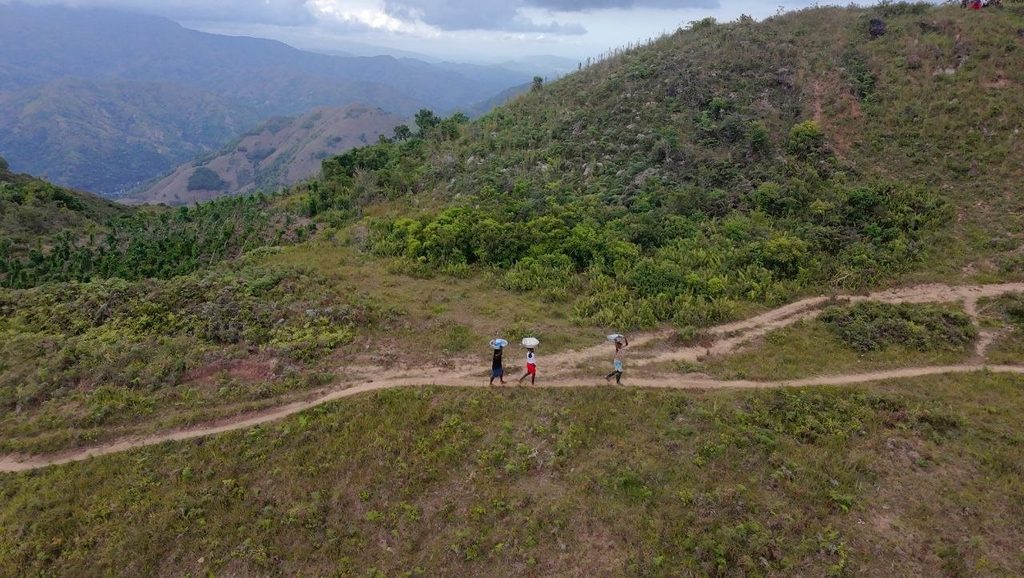
The decree recognizes property titles, occupancy, and customary rights, but the absence of an agreement with the person who owns or occupies the land does not necessarily halt the process. It establishes mechanisms for determining compensation and allows recourse to expropriation on grounds of public utility under the conditions set out in Articles 159 to 165.
The problem is that a territorial conflict cannot be reduced to setting a price. Compensation cannot replace a water source, fertile soil, a cemetery, a sacred site, or community relationships built over generations. Nor does it necessarily account for all the collective harms experienced by those who do not live within the occupied plot but share the same watershed and territory.
For a family displaced by violence, moreover, physical absence during a consultation, survey, or negotiation cannot be allowed to result in the loss of its historical relationship with the land.
Can a Community Say No?
This is one of the fundamental questions left by the decree.
The decree does not expressly recognize the right of communities to reject mining in their territories. It provides for a Community Development Protocol, which must be negotiated before operations are authorized. However, this process takes place when the company already holds a mining permit for the area and may have invested resources in exploration.
The order matters because it favors the company. First, it is granted exclusive rights over the area; then communities are asked to negotiate. By then, the State has already reserved the territory for mining activity, and the company can present its investments and permits as established facts that must be protected.
Under Haiti’s current conditions, fundamental questions remain unanswered: How will people displaced from their communities participate? Who will determine who legitimately represents a community? How will free participation be guaranteed in territories affected by violence or intimidation? What happens when a community does not want to negotiate compensation, but instead wants to reject the exploitation?
Communities are not merely populations that must be informed about decisions made by others. They are political subjects that have historically built relationships with their lands, their water sources, and their forms of production, and they have the capacity to decide the future of those territories.
What Do the Territories Receive in Return?
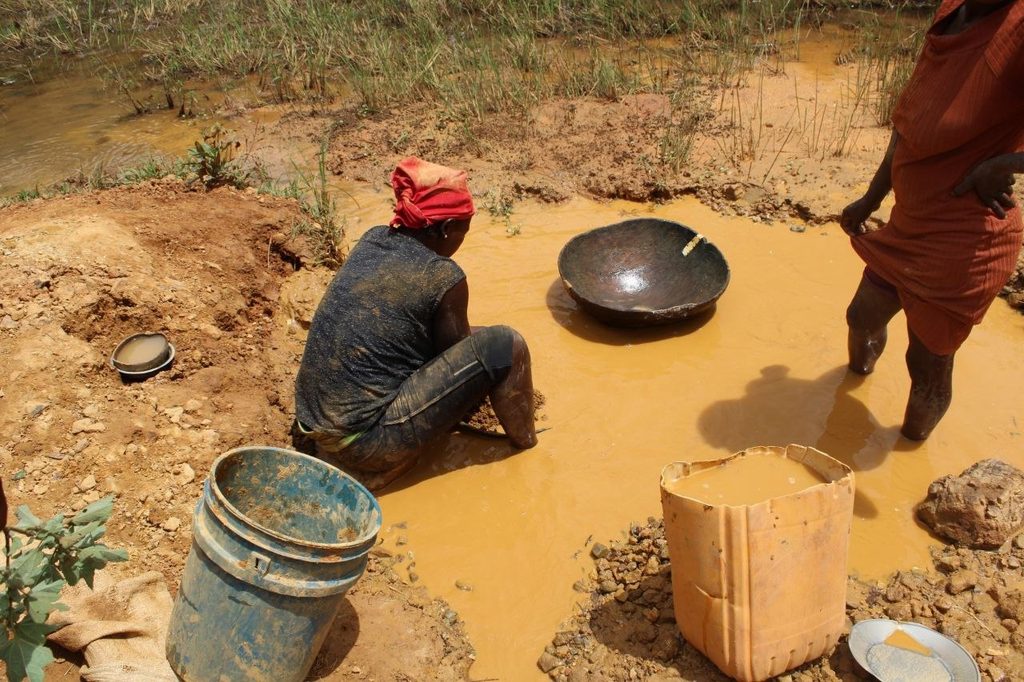
The decree sets royalties at 3.5% for base metal concentrates and 4% for precious metals. It also establishes a payment of US$0.25 per tonne of mineral extracted for the affected territorial collectivities. At the same time, it provides for tax and customs exemptions and advantages for mining activities, as well as fiscal stability mechanisms that may last up to fifteen years.
These figures must be discussed alongside the costs that mining operations can shift onto the territory. Royalties alone do not restore productive land, water sources, or lost economic activities, nor do they guarantee the remediation of long-term environmental and health damage.
Haiti’s own experience with bauxite in Miragoâne calls for caution toward the promise that mineral extraction will automatically translate into local development. The issue is not only what percentage a community will receive, but what transformations it will have to accept in order to receive it and who will bear the costs when extraction ends.
Stop the Decree Before It Creates New Mining Rights
September 30 is not merely an administrative date. The decree’s entry into force activates a new framework as well as its transitional provisions.
The decree establishes, for example, that holders of previous research permits have six months from its publication to state whether they will continue under agreements previously signed with the State or move to the new framework. Exploitation permits granted under the 1976 decree may also be brought under the new framework. In addition, certain applications that were pending when the decree was published may be reformulated after it enters into force and retain priority during the established periods.
This is why it is urgent for Haitian society to know what the decree contains before it begins to be applied. Universities, scientific associations, health professionals, and specialists in water, geology, hydrogeology, agronomy, economics, and law can contribute to publicly examining its provisions and the effects they could have on specific territories.
The reasons developed throughout this article do not depend on a single risk: large territorial areas may be subject to mining rights for decades; watersheds do not coincide with the boundaries of concessions; land ownership does not grant control over the subsoil; Environmental review process allows institutional silence to result in a no-objection; and fundamental questions remain about the effective capacity of communities to reject projects that would transform their territories.
Suspending its entry into force would allow a public discussion to take place before the new framework produces new effects and mining rights. That discussion must begin with a question that comes before any calculation of royalties, investments, or compensation: Do Haitian communities want to open their territories to metallic mining?
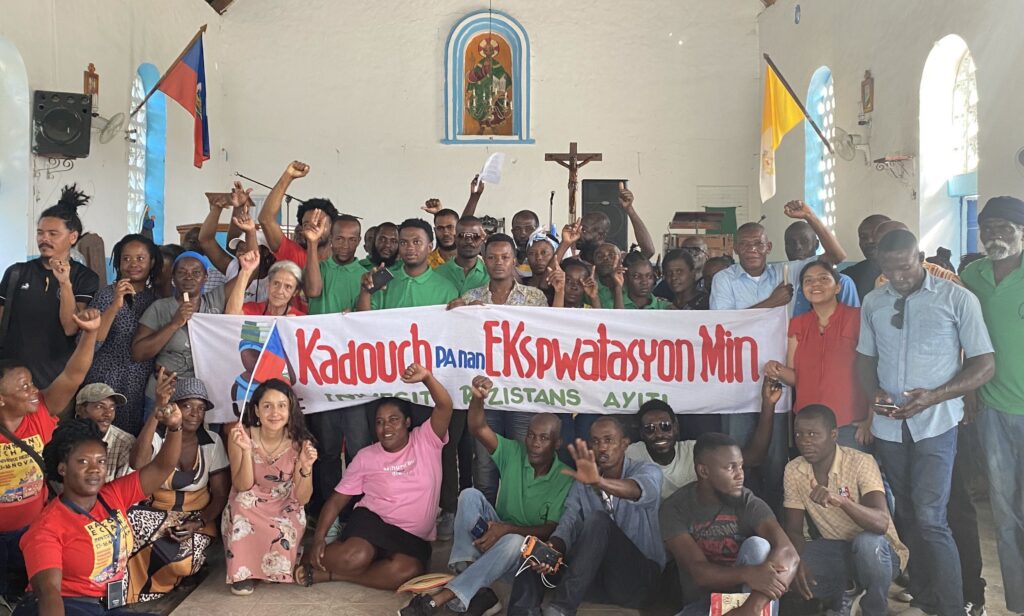
For UNIR, that decision cannot begin with a concession that has already been granted, nor can it end in a negotiation over the value of what a community will lose. Water, land, and the collective right to remain on and make decisions about the territory are not a compensation to be calculated afterward. They are the starting point for any discussion about the future of mining in Haiti.